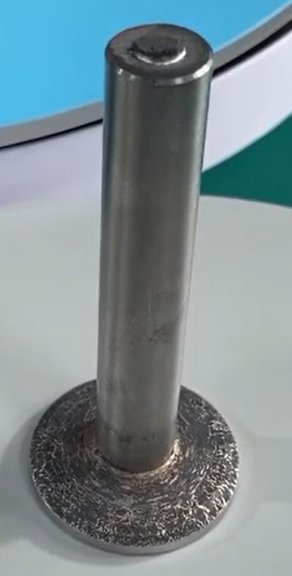
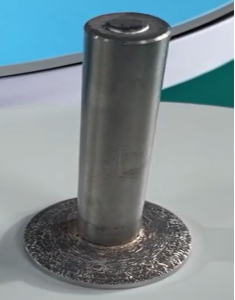
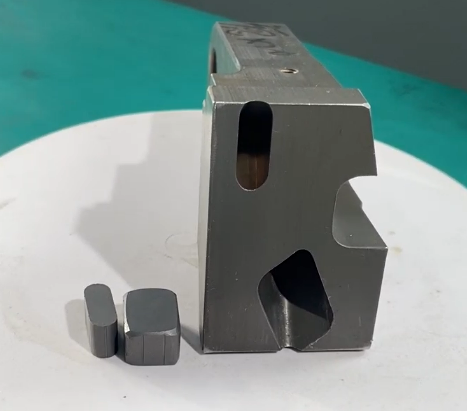
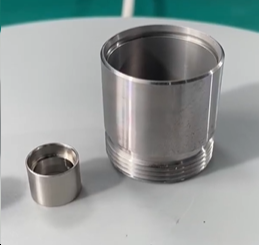
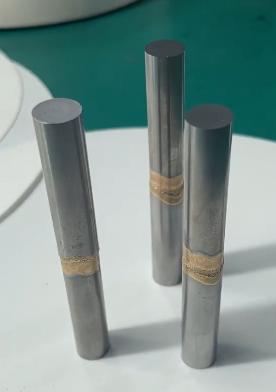
Tungsten steel, stainless steel and mold steel vacuum brazed product
Normantherm•5/22/2026
Vacuum brazing of tungsten steel, stainless steel, and mold steel is a precision joining process widely used in tooling, industrial machinery, semiconductor equipment, and wear-resistant applications. This advanced brazing method enables the strong and reliable bonding of dissimilar metals while maintaining excellent dimensional accuracy and mechanical performance.
In the vacuum brazing process, the components are assembled with a suitable filler alloy and heated inside a high-vacuum furnace. The vacuum environment prevents oxidation and contamination, allowing the filler metal to flow uniformly between the tungsten steel, stainless steel, and mold steel surfaces to create a clean and high-strength metallurgical bond.
The product shown above is a precision vacuum brazed assembly designed for high-strength and wear-resistant industrial applications. Tungsten steel provides excellent hardness and wear resistance, stainless steel offers corrosion resistance, and mold steel contributes toughness and structural stability. The combination of these materials produces a durable component capable of operating under high temperature, pressure, and repeated mechanical stress.
Vacuum brazing ensures minimal distortion, excellent joint integrity, and long service life, making it ideal for manufacturing cutting tools, molds, dies, precision fixtures, and specialized industrial components requiring superior performance and reliability.
You may also like
Vacuum Welding of Cemented Carbide and Cr12MoV Steel for High-Performance Tooling
In modern tooling and die manufacturing, materials must withstand extreme wear, repetitive stress, and demanding production environments. To achieve this, manufacturers often combine cemented carbide with Cr12MoV steel to create tooling components with improved durability and performance.
Carbon steel is strong and cost-effective. Stainless steel is corrosion-resistant and durable. Welding them together gives you a component that takes advantage of both materials without sacrificing either.
Comparison of H13 and Tungsten Carbide Before and After Vacuum Brazing
Before vacuum brazing H13 mold steel and tungsten carbide are just separate pieces. Two different materials sitting side by side but not yet working together. H13 brings toughness and thermal stability. Tungsten carbide delivers extreme hardness and wear resistance.