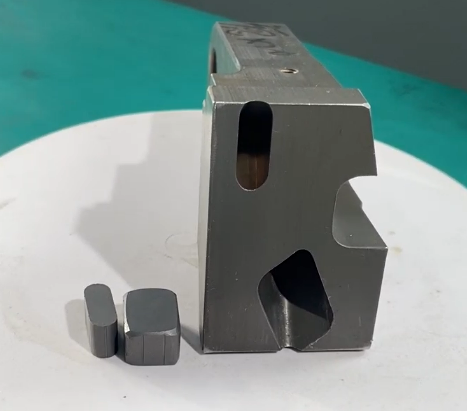
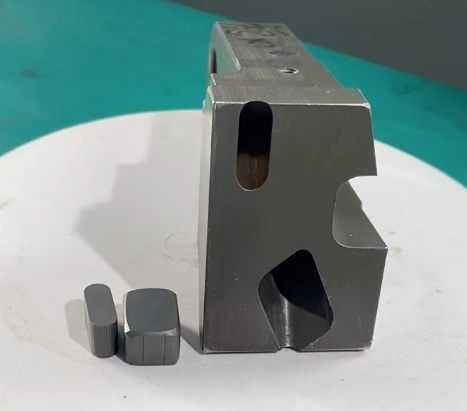
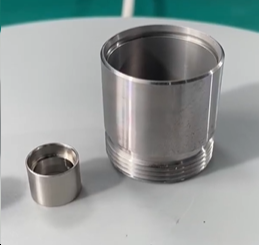
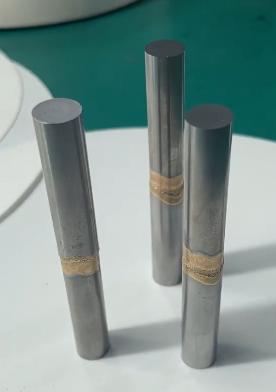
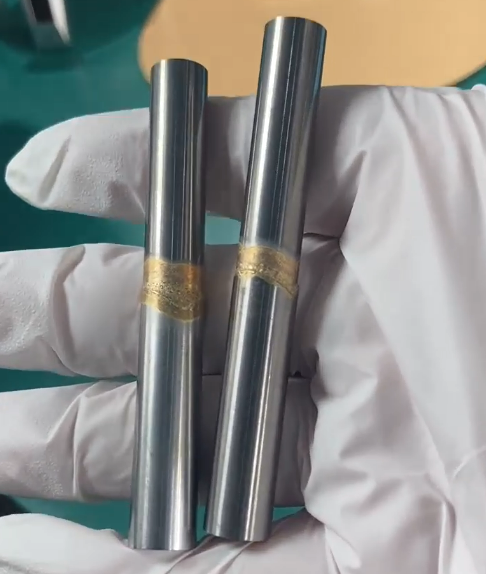
Vacuum Welding of Cemented Carbide and Cr12MoV Steel for High-Performance Tooling
Normantherm•6/3/2026
In modern tooling and die manufacturing, materials must withstand extreme wear, repetitive stress, and demanding production environments. To achieve this, manufacturers often combine cemented carbide with Cr12MoV steel to create tooling components with improved durability and performance.
Vacuum welding has become a preferred joining method for combining these dissimilar materials while maintaining high bonding strength and dimensional accuracy.
Why Combine Cemented Carbide and Cr12MoV Steel?
Cemented Carbide is known for its exceptional hardness, wear resistance, and cutting performance.
Cr12MoV Steel is widely used in molds and dies because of its toughness, dimensional stability, and resistance to wear.
By combining these materials, manufacturers can achieve:
Superior wear resistance in functional areas
High structural toughness and support
Improved tooling lifespan
Better performance in high-load applications
This combination is especially valuable for precision tooling systems.
Challenges in Welding Cemented Carbide and Cr12MoV
Joining cemented carbide with Cr12MoV steel presents several technical challenges due to differences in hardness and thermal behavior.
Common issues include:
Thermal expansion mismatch
Risk of cracking during cooling
Oxidation at high temperatures
Difficulty achieving stable bonding
Traditional welding methods may lead to weak interfaces or inconsistent performance.
Why Vacuum Welding Is the Preferred Solution
Vacuum welding provides a controlled and oxygen-free processing environment, improving joint quality and process reliability.
Key benefits include:
Oxidation-Free Processing
The vacuum atmosphere prevents oxidation and contamination during heating.
Strong Metallurgical Bonding
Precise thermal control ensures reliable joining between carbide and steel.
Reduced Thermal Stress
Controlled heating and cooling help minimize cracking and distortion.
Consistent Production Quality
Vacuum furnace systems deliver repeatable and stable manufacturing results.
These advantages are essential for high-performance tooling production.
Performance Benefits of Vacuum-Welded Components
Finished products made from cemented carbide and Cr12MoV steel offer:
High wear resistance in working surfaces
Excellent toughness and structural stability
Longer service life under heavy production loads
Improved machining and cutting performance
Reduced downtime and maintenance costs
These benefits improve efficiency in demanding industrial applications.
Applications in Tooling and Manufacturing Industries
Cemented carbide and Cr12MoV welded components are widely used in:
Stamping and punching dies
Precision cutting tools
Mold manufacturing systems
Wear-resistant industrial components
Metal forming and machining applications
As India’s manufacturing and tooling sectors continue to expand, demand for advanced joining technologies continues to grow.
Normantherm Vacuum Welding Solutions
At Normantherm, advanced vacuum furnace systems are designed for precision welding and brazing of carbide and tool steel materials.
Our systems provide:
High-vacuum, contamination-free processing
Precise temperature control and uniform heating
Reliable joining for complex tooling applications
Consistent production quality and repeatability
These capabilities help manufacturers produce durable and high-performance industrial tools.
Conclusion
Vacuum welding of cemented carbide and Cr12MoV steel enables manufacturers to produce tooling components that combine superior wear resistance with structural toughness and dimensional stability.
With advanced furnace technology and proven expertise, Normantherm continues to provide dependable vacuum welding solutions for tooling, mold-making, and industrial precision manufacturing.
You may also like
Welding of Carbon Steel and Stainless Steel
Carbon steel is strong and cost-effective. Stainless steel is corrosion-resistant and durable. Welding them together gives you a component that takes advantage of both materials without sacrificing either.
Comparison of H13 and Tungsten Carbide Before and After Vacuum Brazing
Before vacuum brazing H13 mold steel and tungsten carbide are just separate pieces. Two different materials sitting side by side but not yet working together. H13 brings toughness and thermal stability. Tungsten carbide delivers extreme hardness and wear resistance.
H13 Steel and Tungsten Carbide After Vacuum Brazing for High-Performance Tooling
In demanding industrial environments, tooling components must withstand high temperatures, heavy mechanical loads, and continuous wear. To achieve this performance, manufacturers often combine H13 mold steel with tungsten carbide.