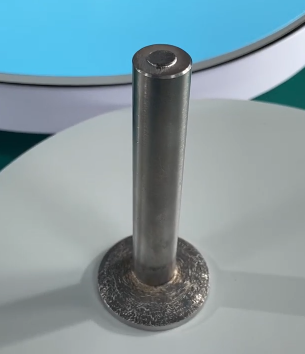
Vacuum Brazing of Tungsten Carbide and Stainless Steel Mandrels for High-Pressure Rotary Joints
Normantherm•4/21/2026
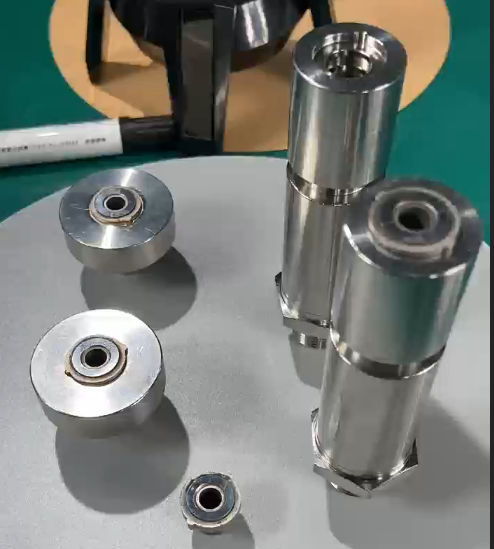
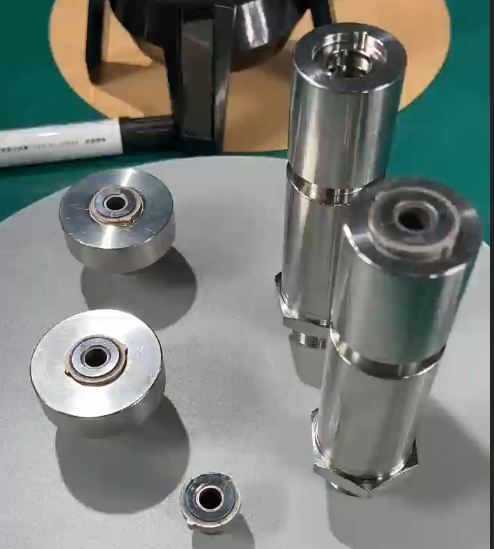
High-pressure rotary joints are essential components in industries that require the transfer of fluids between rotating and stationary systems. At the core of these systems are mandrels that must withstand extreme pressure, friction, and continuous motion.
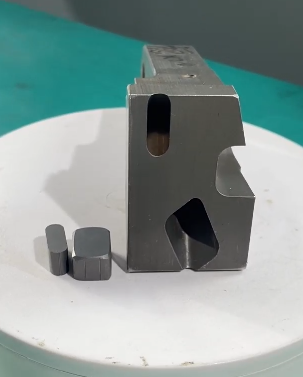
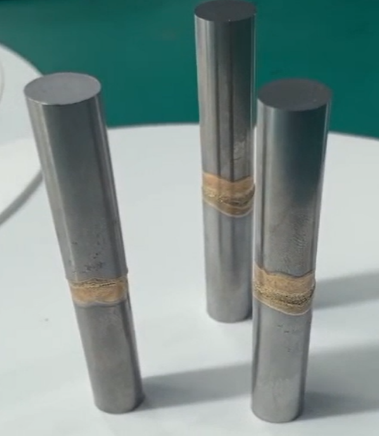
To meet these demands, manufacturers combine tungsten carbide and stainless steel, leveraging the strengths of both materials. Vacuum brazing is the preferred method for joining these dissimilar materials, ensuring strong, reliable, and leak-proof assemblies.
Material Advantages for Rotary Joint Mandrels
Tungsten Carbide is widely used in wear-critical applications due to its exceptional hardness and resistance to abrasion. It ensures long service life in high-friction environments.
Stainless Steel provides structural strength, corrosion resistance, and durability under mechanical stress.
The combination of these materials allows mandrels to maintain performance under high pressure and continuous rotation.
Challenges in Joining Tungsten Carbide and Stainless Steel
Joining tungsten carbide with stainless steel presents several technical challenges.
The materials differ significantly in thermal expansion, hardness, and bonding characteristics. Conventional welding methods can lead to:
Cracking at the interface
Weak bonding due to poor wetting
Oxidation during heating
Thermal stress and distortion
To overcome these issues, a highly controlled process environment is required.
Why Vacuum Brazing Is the Preferred Solution
Vacuum brazing offers a controlled and contamination-free environment, making it ideal for joining carbide and steel components.
The process is carried out in a high-vacuum furnace, ensuring that oxygen and impurities are eliminated. Precise temperature control allows the brazing filler metal to flow uniformly, creating strong metallurgical bonds.
Key advantages include:
Oxidation-free processing
Strong and uniform bonding
Leak-proof joint formation
Reduced thermal stress
High repeatability for industrial production
These benefits are critical for high-pressure applications.
Performance Benefits of Vacuum-Brazed Mandrels
Mandrels produced using vacuum brazing exhibit superior performance characteristics:
High wear resistance from tungsten carbide
Strong structural support from stainless steel
Reliable sealing under high pressure
Stability under continuous rotation
Extended service life with reduced maintenance
These features ensure the efficiency and durability of rotary joint systems.
Applications in Indian Industrial Sectors
In India, high-pressure rotary joints and their mandrels are widely used in:
Oil and gas processing systems
Steel and metal production plants
Chemical processing industries
Heavy machinery manufacturing
Industrial automation systems
As these industries expand, the demand for durable and high-performance components continues to increase.
Normantherm Vacuum Brazing Solutions
At Normantherm, advanced vacuum brazing furnaces are designed for precision joining of dissimilar materials such as tungsten carbide and stainless steel.
Our systems offer:
High-vacuum environments for clean processing
Precise temperature control and uniform heating
Reliable bonding for complex geometries
Consistent and repeatable production results
These capabilities enable manufacturers to produce high-quality mandrels for demanding applications.
Conclusion
Vacuum brazing of tungsten carbide and stainless steel mandrels is essential for manufacturing reliable components used in high-pressure rotary joints. By ensuring strong, leak-proof joints and maintaining material integrity, vacuum brazing supports critical industrial applications.
With advanced furnace technology and proven expertise, Normantherm continues to provide dependable solutions for precision manufacturing and material joining.
You may also like
Cemented Carbide Welding with Cr12MoV
Cemented carbide brings extreme hardness and outstanding wear resistance to any cutting edge. Cr12MoV tool steel delivers high compressive strength good toughness and excellent dimensional stability. Weld them together and you get a component that outperforms either material alone.
Tungsten carbide vacuum brazed products are high-performance industrial components designed for applications requiring exceptional hardness, wear resistance, and durability.