 Product News
Vacuum Brazing Technology for PCD End Mills
Normantherm•5/24/2026
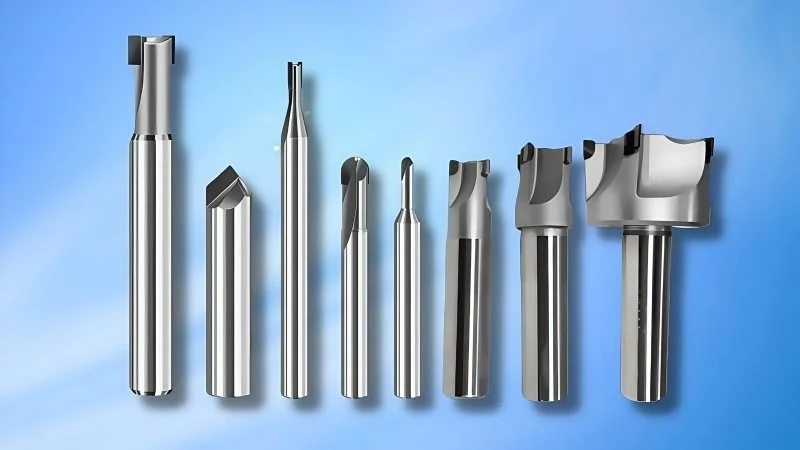

1) Why Vacuum Brazing is Used for PCD End Mills
Unlike mechanical clamping or sintering, vacuum brazing securely bonds the PCD tip to a WC (tungsten carbide) or steel tool body, providing:
Strong metallurgical joint → withstands high cutting forces and vibrations.
Clean, flux-free bond line → critical for tool precision and balance
Minimal distortion → keeps cutting-edge geometry accurate
Hermetic, stable joints → no contamination at cutting zone
2) Filler Alloy Selection
The most common filler for PCD tool brazing is Ag-Cu-Ti (silver–copper–titanium):
Ag + Cu → lowers melting point (~780–830 °C), improves wetting
Ti → reacts with diamond surface, forming a thin TiC layer that enables strong adhesionBenefits → ductile joint, good thermal/electrical conductivity
Challenges → brazing temperature must be carefully controlled (too high → PCD graphitization, too low → poor wetting)
Alternative fillers include Ni-Cr-Si-B alloys for higher temperature resistance, but these risk thermal damage to PCD.
3) Advantages in Aerospace Tooling
Higher tool life → PCD lasts 10–50× longer than carbide when cutting composites and Al alloys.
Superior surface finish → reduces need for secondary finishing in aerospace components.
Reliable brazed joint → withstands high spindle speeds and intermittent cutting forces.
Flux-free vacuum brazing → ensures no inclusions that could weaken bond or affect tool balance.
4) Future Trends
Laser-assisted brazing for local heating, protecting PCD integrity.
Nano-reinforced filler alloys to reduce brittle phases.
Hybrid brazing + additive manufacturing for customized aerospace tools.
Automated vacuum brazing lines for high-volume aerospace tool production with consistent quality.