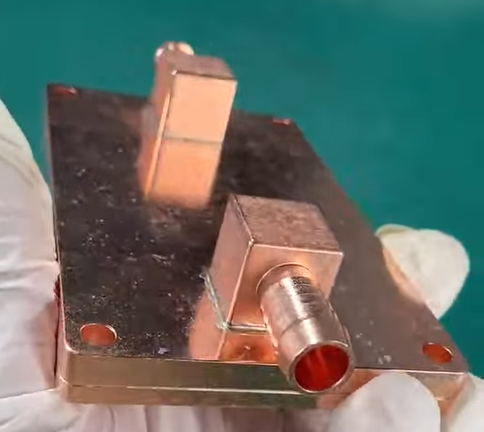
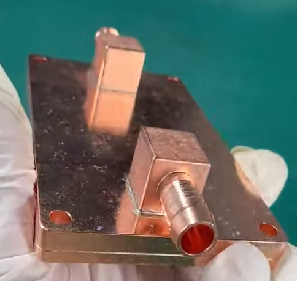
Vacuum brazed of copper water cold plate finished product
Normantherm•5/15/2026
In the rapidly evolving landscape of high-power electronics, the demand for efficient heat dissipation has never been more critical. Vacuum brazed copper water-cold plates represent the pinnacle of liquid cooling technology, offering unmatched thermal conductivity and structural integrity for demanding industrial applications.
The Vacuum Brazing Advantage
The product shown exhibits the characteristic clean, oxidation-free finish of vacuum brazing. Unlike traditional welding or torch brazing, vacuum brazing occurs in a controlled environment at pressures below 10−4 mbar. This prevents the formation of oxides and ensures that the copper retains its superior thermal property, k ≈ 400 W/m·K.
Key Technical Benefits:
- Flux-Free Joints: Since the process occurs in a vacuum, no corrosive flux is required, eliminating the risk of internal channel contamination.
- Leak-Proof Reliability: The capillary action in vacuum brazing creates high- strength, hermetically sealed joints across large surface areas.
- Complex Internal Geometries: This technology allows for the joining of intricate internal "fin" structures or micro-channels that maximize the surface area-to-coolant ratio.
Structural Anatomy
As seen in the finished product, the assembly typically consists of a machined copper base plate joined to a cover plate, with precision-brazed inlet and outlet manifolds. The localized "skived" or machined fin area (visible in technical prototypes) is where the primary heat exchange occurs. The coolant flows through these internal paths, absorbing heat.
You may also like
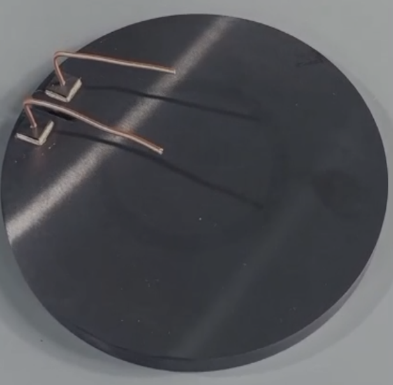
Silicon carbide heating plate electrode welding
Silicon carbide heating plate electrode welding is a specialized joining process used to manufacture high-performance heating components for vacuum furnaces, semiconductor equipment, and industrial thermal systems.
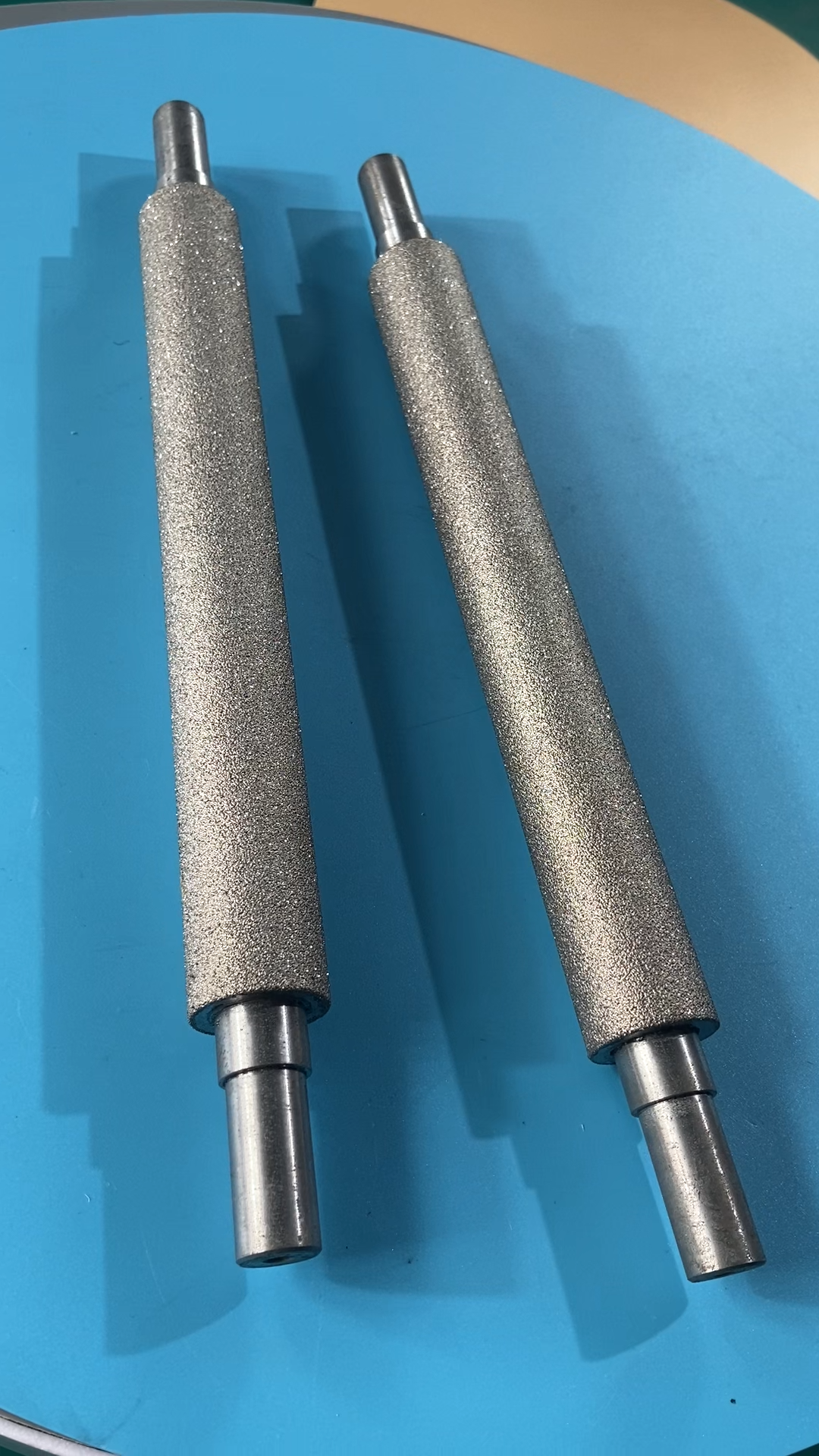
A diamond tool is only as good as the bond holding the diamonds in place. Weak bonding means diamonds pull out early and tool life drops. Precision brazing solves that problem.
Heat treatment of 316L stainless steel is an important process used to improve corrosion resistance, relieve internal stresses, and maintain the material’s mechanical properties for industrial applications.