Cubic Boron Nitride (CBN) cutting tools are widely used in high-precision machining applications where extreme hardness, thermal stability, and wear resistance are required. These tools are commonly applied in hard turning of hardened steels, cast irons, and powder metallurgy components, where conventional carbide tools fail to deliver consistent performance. The reliable joining of CBN inserts to steel or carbide tool holders is a critical step in tool manufacturing, as the brazing quality directly affects cutting accuracy, tool life, and operational safety.
Vacuum brazing has become the preferred method for joining CBN tools due to its ability to provide clean, oxide-free joints with excellent metallurgical bonding. In this process, the CBN insert is brazed to the tool body under high vacuum conditions, typically in the range of 10^-3 to 10^-5 Pa. The vacuum environment eliminates oxygen and contaminants, preventing oxidation of both the CBN material and the brazing filler alloy. This results in superior wetting, uniform filler flow, and a strong, void-free brazed interface, which is essential for high-speed and high-load cutting applications.
Active brazing alloys based on silver, copper, or nickel systems, containing reactive elements such as titanium or chromium, are commonly used to achieve reliable bonding between the CBN insert and the tool body. Brazing is typically carried out at temperatures between 850 °C and 1,100 °C, depending on the filler alloy and tool geometry. Accurate temperature control and stable heating cycles are essential to prevent thermal shock and to reduce residual stresses in the brazed joint.
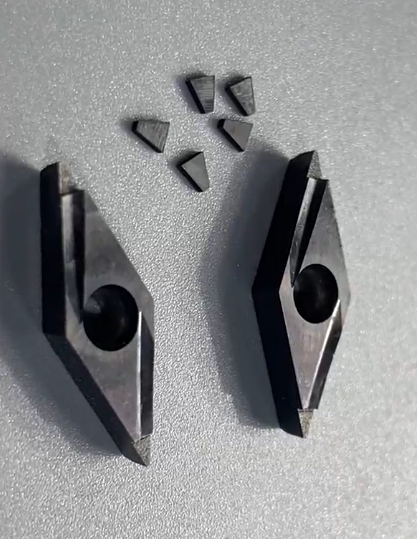
The CBN cutting tools shown were vacuum brazed using a Normantherm vacuum brazing furnace. Normantherm furnaces are specifically designed for high-precision brazing of superhard materials, offering excellent temperature uniformity, stable vacuum levels, and fully programmable heating profiles. The furnace system enables accurate control of ramp rates, soaking time, and cooling stages, ensuring repeatable brazing quality across production batches. The clean vacuum environment eliminates flux residues and post-brazing contamination, improving tool reliability and reducing finishing operations.
To sum up, Normantherm vacuum furnaces are widely used for brazing a broad range of industrial materials, including cemented carbide, tool steels, stainless steels, copper alloys, hard alloys, and dissimilar metal assemblies. The precise temperature control, stable high-vacuum environment, and flexible heating programs enable consistent, high-strength joints across diverse brazing applications. This versatility makes Normantherm vacuum furnaces a reliable solution for manufacturers seeking high-quality brazing performance in demanding precision engineering industries.
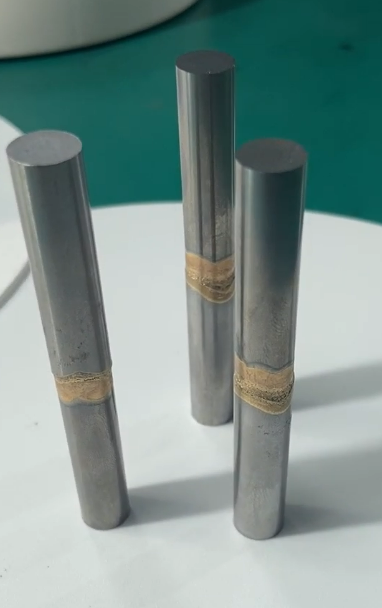
Vacuum Brazed H13 Tool Steel and Tungsten Carbide Assembly
The components shown above are H13 tool steel and tungsten carbide assemblies processed in a Normantherm vacuum brazing furnace. This material combination is commonly used in punching tools, wear parts, forming dies, and cutting applications where both toughness and wear resistance are required.
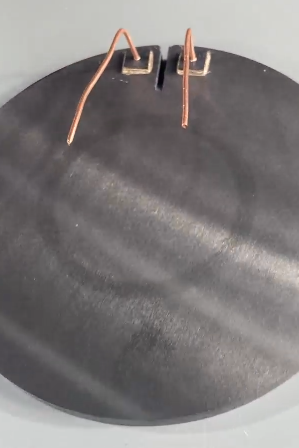
A silicon carbide heating plate is built for extreme temperatures. But the electrode connection is often the weakest link. Poor welding creates resistance heat buildup and premature failure.
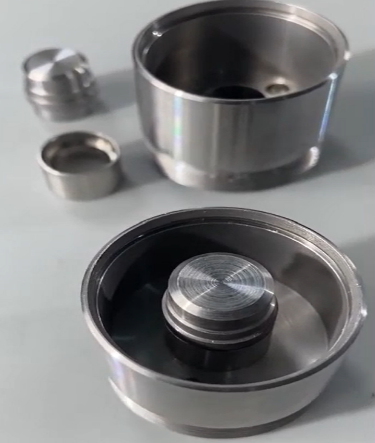
Vacuum brazing of carbon steel with stainless steel
Vacuum brazing of carbon steel with stainless steel is an advanced joining process widely used in industrial, automotive, aerospace, and precision engineering applications where high-strength and leak-free assemblies are required.