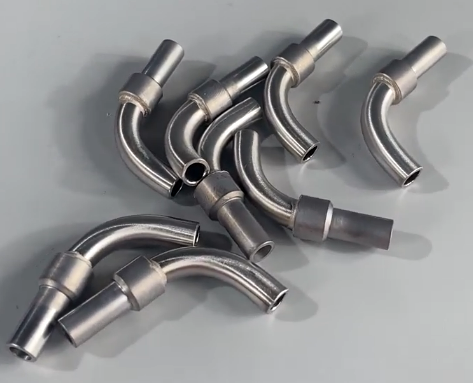
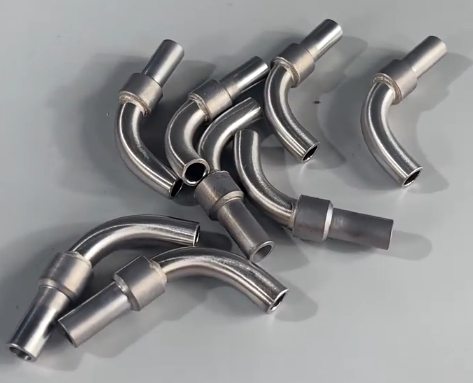
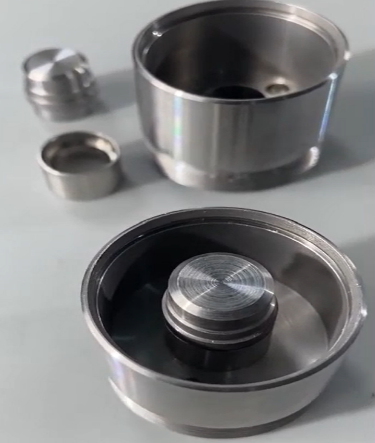
Vacuum Brazing of 316L Stainless Steel and TC4 Titanium Alloy for High-Performance Applications
Normantherm•4/16/2026
The combination of stainless steel and titanium alloys is increasingly used in industries requiring high strength, corrosion resistance, and lightweight performance. Among these, 316L stainless steel and TC4 titanium alloy are widely recognized for their complementary properties.
Joining these dissimilar materials requires advanced processing techniques to ensure strong bonding and reliable performance. Vacuum brazing has become the preferred method for producing high-quality finished components from these materials.
Material Overview: 316L Stainless Steel and TC4 Titanium Alloy
316L Stainless Steel is known for its excellent corrosion resistance, low carbon content, and good mechanical stability. It is widely used in chemical processing, medical equipment, and marine applications.
TC4 Titanium Alloy is a high-performance titanium alloy offering an exceptional strength-to-weight ratio, corrosion resistance, and fatigue resistance. It is commonly used in aerospace and high-end engineering applications.
Combining these materials enables the development of components that benefit from both durability and lightweight design.
Challenges in Joining Stainless Steel and Titanium
Joining 316L stainless steel with TC4 titanium alloy is technically challenging due to differences in melting points, thermal expansion coefficients, and chemical reactivity.
Common issues include:
Formation of brittle intermetallic compounds
Oxidation of titanium at high temperatures
Thermal stress and distortion
Weak bonding at the interface
To overcome these challenges, a controlled and contamination-free environment is essential.
Why Vacuum Brazing Is the Ideal Solution
Vacuum brazing provides a highly controlled process environment that enables reliable joining of stainless steel and titanium.
Key advantages include:
Oxidation-Free Environment
The vacuum eliminates oxygen, preventing oxidation of titanium during the brazing process.
Controlled Temperature Profile
Precise temperature control minimizes the formation of brittle phases and ensures proper filler metal flow.
Strong Metallurgical Bonding
Vacuum brazing produces clean and uniform joints between dissimilar materials.
Reduced Thermal Stress
Controlled heating and cooling cycles reduce distortion and improve joint stability.
Performance Benefits of Brazed Assemblies
Finished products made from 316L stainless steel and TC4 titanium alloy offer several performance advantages:
High strength combined with lightweight properties
Excellent corrosion resistance in harsh environments
Stable performance under thermal and mechanical stress
Long service life and reduced maintenance
Reliable performance in critical applications
These characteristics are essential for advanced engineering systems.
Applications in Indian Industrial Sectors
In India, vacuum-brazed stainless steel and titanium components are increasingly used in:
Aerospace and defense manufacturing
Medical device production
Chemical processing equipment
Precision engineering industries
High-performance industrial systems
As industries adopt advanced materials, demand for reliable joining technologies continues to grow.
Normantherm Vacuum Brazing Solutions
At Normantherm, advanced vacuum brazing furnaces are designed to handle complex dissimilar material combinations.
Our systems offer:
High-vacuum environments for oxidation-free processing
Precise temperature control and uniform heating
Reliable joining of stainless steel and titanium alloys
Consistent, repeatable production results
These capabilities support manufacturers in achieving high-quality finished products.
Conclusion
Vacuum brazing of 316L stainless steel and TC4 titanium alloy enables the production of high-performance components that combine strength, corrosion resistance, and lightweight design. By ensuring clean and reliable joints, this process supports the growing demands of advanced industries.
With advanced furnace technology and proven expertise, Normantherm continues to provide dependable solutions for complex material joining in modern manufacturing.
You may also like
Vacuum Brazed H13 Tool Steel and Tungsten Carbide Assembly
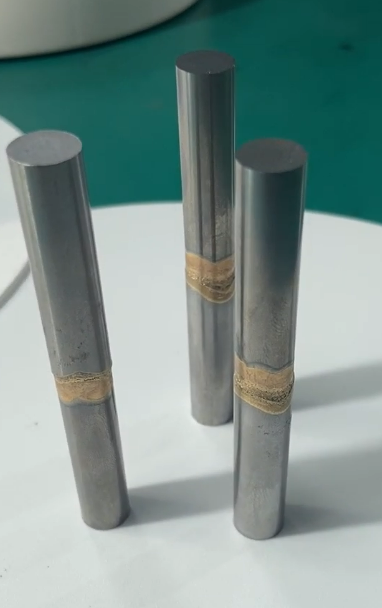
The components shown above are H13 tool steel and tungsten carbide assemblies processed in a Normantherm vacuum brazing furnace. This material combination is commonly used in punching tools, wear parts, forming dies, and cutting applications where both toughness and wear resistance are required.
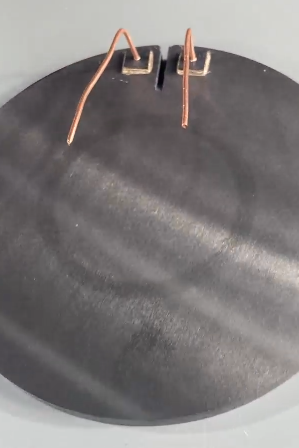
A silicon carbide heating plate is built for extreme temperatures. But the electrode connection is often the weakest link. Poor welding creates resistance heat buildup and premature failure.
Vacuum brazing of carbon steel with stainless steel
Vacuum brazing of carbon steel with stainless steel is an advanced joining process widely used in industrial, automotive, aerospace, and precision engineering applications where high-strength and leak-free assemblies are required.